Why Turkish Shopping Malls Took a Different Path?


Dr. Herman J. Kok
DISCvision- Associate Partner
AVM
PERAKENDE
YATIRIMCI
ÇEVRESEL, SOSYAL & KURUMSAL YÖNETİŞİM (ESG)
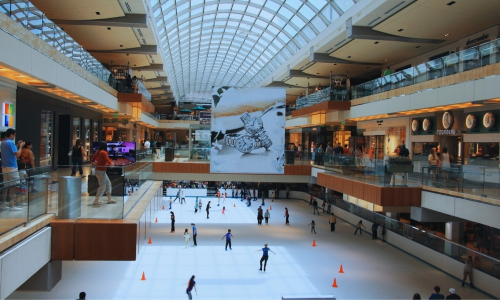
When Turkey began developing modern shopping malls in the late 1980s and 1990s, the country looked toward the United States and Europe and the United States for inspiration. The concept Galeria Ataköy, Turkey's first modern mall inaugurated in 1988, was inspired by the Galleria mall in Houston, Texas. Early mall destinations like Akmerkez, Capitol, and Carousel were inspired by western concepts. The US offered the indoor climate-controlled mall as a suburban lifestyle destination. Europe provided integrated urban centres, strict planning, and more compact formats on neighbourhood level. Yet the Turkish mall that emerged over the next three decades became neither a copy of the US nor a replica of the European model. It became something distinct. A hybrid shaped by rapid urbanisation, rising incomes, new consumption cultures and a development sector that learned fast and innovated even faster.
For Turkish mall professionals, understanding this divergence is more than a historical curiosity. It explains why Turkish malls look and operate the way they do today. It also clarifies what the next phase of the sector will demand from asset managers and developers.
A Different Urban Starting Point
The American suburban mall grew out of car dependent lifestyles, low density housing and private land development. Viktor Gruen's idea was to create new multifunctional town centres, and the monofunctional mall was the outcome. European malls were fitted into historical city and town centres with mature high streets and strict planning regulation that limited expansion. Turkey entered the mall era with neither of these conditions.
Turkish cities were growing rapidly, both demographically and spatially, and had limited modern retail infrastructure. Public spaces were insufficient and often undermanaged for a rapidly growing middle class that sought comfort, safety and variety. Consumers did not abandon high streets; they simply lacked high streets that matched their expectations for convenience, cleanliness and leisure. Malls stepped into that gap. As a result, Turkish shopping centres became not only retail environments but also ‘third place' community infrastructure.
The Mall as Centre Point of the Community
While shopping centres in Europe often complement public squares and highstreets, they do not replace them. In Turkey, AVM malls became a primary meeting place for families, young people and the emerging consumer class. Air conditioning, security, food courts and global brands in a clean setting created a sense of modernity and comfort that the city outside could not always provide.
Turkish shopping centres do not simply organise retail; they are in the heart of everyday life. Developers responded by adding non-retail elements such as cinemas, event spaces, open air terraces, landscaped courtyards and public seating. The mall turned into a lifestyle centre even before that term became fashionable in the US or Europe. Also, the shopping centre identity reflects the identity of surrounding communities to whom the mall is relevant.

Governance And Urban Planning Guidelines Shaped by Flexibility
Another difference is the planning environment. Europe regulates retail development heavily, with impact assessments, zoning and urban design requirements. The US is more flexible in planning but is controlled by suburban land economics and local politics.
Turkey, especially in the 2000s and early 2010s, offered a more entrepreneurial environment. Local authorities often saw shopping centres as symbols of economic progress. Developers could move quickly and assemble large sites. A strong economic recovery and an orientation on Europe attracted international developers and investors into the market like Multi Development, ECE, Corio (now Klepierre), and Redevco. This big pool of domestic and international players produced ambitious projects that combined indoor and outdoor zones, mixed use elements and iconic architecture. Schemes like IstinyePark, Kanyon and Zorlu Center made a statement: Turkey could produce mall environments that were competitive with global benchmarks. And Multi's Forum became recognisable in many cities and towns throughout the country. Shopping centre supply grew from approximately 1.5 mln sqm GLA in 2000 to 14.3 million sqm GLA and another one million sqm in the pipeline by 2025 q1.
This flexibility also means that Turkish malls vary widely in scale and concept. Some resemble American lifestyle centres, others like European urban malls, and many are unique hybrids that reflect local demand. While open village like concepts like Forum Bornova in Izmir, Afium in Afyon and Galataport and Viaport in Istanbul gained some position, the hypermarket anchored centre concept, leading in France and Southern Europe, became less prominent because of the weak position of the hypermarket format vis-à-vis the supermarket format.
Expectations were high that Turkey would take up its place in the ranks of international retail investment markets, with investors like Pradera, Vastned, Corio, and Blackstone active in the market and the Multi-Turkey Fund as an innovative investment vehicle. For several reasons, that evolution stopped after a promising start, and the market is dominated by local investors.

A Different Tenant Mix and Consumer Culture
US malls relied strongly on department stores as anchors. In Europe, the anchor mix consists of fashion-flagships, hypermarkets and services. Turkey built its retail ecosystem by developing strong domestic brands such as Mavi, LC Waikiki and Koton alongside international players entering the market through franchise systems. Food and beverage became a much larger share of turnover than in most European centres, as outdoor dining is more common in Turkey compared to many European markets. High dwell times drove that shift. Shoppers come not only to shop but to eat, meet friends, work, or simply spend time.
For asset managers, this means that food, leisure and experience have always been core strategic components next to retail in Turkey, not defensive add ons as in many European centres affected by e commerce.
Why the Outcome Was Different from the Original Models?
Mall developers in Turkey borrowed ideas from Europe and the US, but the market forces, consumer culture and urban environment shifted the model. Several factors explain this difference:
- Rapid economic and demographic growth in the 2000s and early 2010s created strong, unmet demand for modern retail and leisure;
- Weak public space and fragmented high streets pushed social activities into malls, though the quality of public space had been improving in recent years;
- A development driven economy allowed large scale, architecturally ambitious projects;
- Local brands and formats were established and adapted quickly and filled the tenant mix with accessible fashion and dining;
- The mall acted as ‘third space', a symbol of progress and a form of urban order for many.
The result is a mall landscape that is more socially embedded and more multifunctional than both the US and European models.

What This Means for the Future?
The current market context is more challenging. Currency volatility, competition, rising operating costs and shifts in consumer expectations require a strategic response. Also, city centre area and public spaces in many cities are being improved and have a much higher appeal than in the past. Lessons from the US and Europe are relevant but not directly transferable. Turkey avoided the kind of large scale mall decline seen in the US, though some second tier centres are now under pressure and several schemes are awaiting transformation. Europe's focus on mixed use and repurposing offers clues, but the design of many Turkish malls will make the inclusion of mixed-use elements a complex one.
For developers and investors, upcoming questions in the current market cycle include:
- How to refresh and upgrade ageing centres without losing their community function
- How to integrate mixed with respect to the identity of the mall
- How to manage tenant risk in a volatile market environment with currency swings
- How to further modernise food and leisure offerings that drive dwell time
- How to adopt ESG and operational efficiency models in a more demanding and competitive market context.
The Turkish mall story is entering a new chapter in which insight driven asset management, flexibility, operational excellence and experience design will matter more than ever. Given the flexibility and creativeness in the market, Turkey is in a good starting position.
12 Aralık 2025
858
*Dijital Network Alkaş (“DNA”), blog yazarı tarafından DNA'da paylaşılan içeriklerin doğruluğundan, geçerliliğinden, güncelliğinden ve telif hakları konusundaki iddialardan sorumlu değildir. Tüm hukuki ve cezai sorumluluk blog yazarına aittir.



Blog
14 Eylül 2026

Yapay Zekâ Çağında Yeni Rekabet Avantajı Bilmek Değil; Harekete Geçmek
Tunç Berkman
TBS Investment & Management


Blog
7 Eylül 2026

BETON VADİLERİNİN GÖRÜNMEZ TEHLİKESİ: KENTSEL ISI ADALARI
Buğra Esen (MRICS)
Gayrimenkul Değerleme Uzmanı, Akademisyen


Blog
13 Ağustos 2026
DİJİTAL DÖNÜŞÜM, DİJİTAL MESAİ, DİJİTAL YORGUNLUK
Buğra Esen (MRICS)
Gayrimenkul Değerleme Uzmanı, Akademisyen

Blog
16 Temmuz 2026
Sahiplik Bitiyor, İlişki Ekonomisi Büyüyor: Yeni Ekonominin Görünmeyen İş Modeli
Tunç Berkman
TBS Investment & Management
İlgili Yazılar...

Blog
19 Eylül 2022

Nefes Alıp Veren Bir Deneyim “42 Maslak”
Erol Özmandıracı
Bay İnşaat, Yönetim Kurulu Üyesi
AVM
DİĞER
C-LEVEL
TİCARİ GAYRİMENKUL
MAĞAZACILIK



Rapor
10 Haziran 2022

GYODER Çözüm Platformu Sonuç Bildirgesi Yayınlandı!
DNA Editör
Editör
GAYRİMENKUL
YATIRIMCI
GAYRİMENKUL DEĞERLEME



Haber
28 Haziran 2021
Gayrimenkul Yatırımında En Avantajlı Yöntem; Gayrimenkul Yatırım Fonu
DNA Editör
Editör
GAYRİMENKUL
YATIRIMCI

Blog
23 Ocak 2023

"Re-set Global Network" Etkinlikleri Başladı!
Özlem Dalga
İletişim Uzmanı, Gazeteci, Sunucu, Ekonomist, Proje Yöneticisi
YATIRIMCI


Rapor
31 Mart 2023
2023’ün Perakende Trendleri Raporu Yayımlandı - Mastercard Global Ekonomi E...
DNA Editör
Editör
PERAKENDE
FİNANS / EKONOMİ
C-LEVEL
MÜŞTERİ DENEYİMİ


Rapor
2 Mayıs 2023
PwC Türkiye'den Yeni Tüketicinin Yeni Denklemi Raporu
DNA Editör
Editör
E-TİCARET
PERAKENDE
DANIŞMANLIK / ARAŞTIRMA

Rapor
11 Mayıs 2023
2023 Perakende Sektörü Görünümü Raporu - Deloitte
DNA Editör
Editör
PERAKENDE
DANIŞMANLIK / ARAŞTIRMA


İletişim
organizasyon@alkas.com.tr
© Digital Network Alkaş | 2026