Shopping Centres – Adapt or Decay


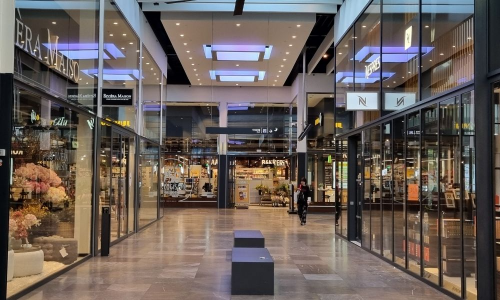
Shopping centres accommodate many stakeholders like retailers, F&B operators, and service and leisure providers. All of them are focused on satisfying the needs and wishes of the visitors they serve. Shopping centres are places where all these interests are coming together. In a changing world, dynamics in interests, needs, and wishes are part of life. Shopping centres as physical places do have to accommodate these. Change and renewal of shopping centres are therefore essential.
In the current days of retail disruption, pressure on shopping centres is even higher. The impact of e-commerce and multi-channel retail, changing demographics and urbanisation patterns, changing consumer behaviour are all felt and need a response.
Centres once built as monofunctional retail islands with a given positioning and concept have to evolve to adapt to new market circumstances. In today's context where a simple enlargement is often not feasible or possible, a transformation into a multifunctional and integrated urban places is often seen as a solution.
In Turkey in particular, where shopping centre supply went through a period of fast growth between 2005 and 2020 which saw new competitors with often more scale and a stronger concept entering the market, renewal by transformation is a key approach.
Transformation of shopping centres can include the following elements:
1: Connectivity: Successful centres are often no longer inward-looking enclosed buildings anymore but evolve to more open hubs integrated with transport and neighbourhoods. Gelderlandplein a 30,000 sqm shopping centre in Amsterdam owned by Kroonenberg, transformed almost 10 years ago, evolved from an enclosed to a scheme where the outside was opened by accommodating restaurants and café's as well as services, giving the scheme a stronger exposure from the street, and embedding the scheme into the surrounding urban fabric. A nice example in Istanbul is City's Istanbul at Köztayagi . What has long been successful as hypermarket anchored shopping centre at a strategic location with good access needed a new profile in response to the arrival of schemes like Akasya and Emaar Square and the changing market position of hypermarket concepts. The result is a more open scheme with streets and squares, and restaurants on the outside.
2: Diversification: By adding new functions like housing, leisure, culture, and care to reduce dependency on retail turnover and to respond to more motives for people to visit the centre. In countries like the UK and the Netherlands, the need to make retail more compact goes often hand in hand with the addition of housing and cultural services. High demand for urban housing near centres areas and also an advancing process of ageing make that housing nearby or integrated in centre areas is in high demand. In de Bogaard in Rijswijk near The Hague was an 80,000 sqm regional shopping centre that lost a part of its relevance after the opening of the 90,000 sqm Westfield Mall of the Netherlands approximately 10 km to the north. While the retail sqm GLA is being reduced, new housing is added on top of the centre and next to the centre. Another nice example is 44,000 sqm Lippulaiva, a district centre owned by Citycon in Espoo, west of Helsinki - Finland. Connection to a new metro line and residential development in the area allowed the centre to be enlarged. This enlargement and renewal came in combination with residential development integrated in the project, and a cultural and social program including a library and learning centre, and a medical health centre. These facilities function as anchors in the scheme next to the traditional hypermarket anchors K-Market and Prisma.
3: Identity and Authenticity: A link to the characteristics of the surrounding catchment area. A positioning in which local visitors do recognise themselves by which they are willing to see the shopping centre as their place is becoming more important. A clear shift from standard boxes to local embeddedness. The Stroink local neighbourhood centre in Enschede – the Netherlands, owned by WP Retail Invest, is a nice example where a local shopping centre has been modernised and revamped. Features in the design include traditional thatched roofs common in the region. Another good example is Hoog Catharijne in Utrecht – the Netherlands, owned by Klepierre. An enclosed concrete shopping box separating the city centre from the station area was redeveloped into a contemporary urban scheme that opened up with daylight, provided clear routes and reconnection to the station. The previously dampened Catharijnesingel canal was recreated and the shopping mall, bridging the canal was turned into part of the city's public realm. Another strong example is The Playce, the former Potsdamer Platz Arkaden, in Berlin, and managed by ECE. This inward-looking 1990s arcade has been nicely reworked into a porous, gastronomy-led, eventable ground plan that ties back into the Potsdamer Platz area's urban fabric. The well conceptualised Manifesto food hall acts as a true anchor for the scheme.
4: Flexibility: Plans with open ends that allow gradual transformation. Major transformation plans like Forum des Halles in Paris and Iso Omena come with a high degree of flexibility and phasing that allows the plans to be implemented with disrupting the operation. Iso Omena is a nice example of a strategy of phased upgrading where new functions and parts were added in a modular way and mall modernisation was tackled section by section. The transformation of Forum des Halles and also Hoog Catharijne in Utrecht was led by a ‘framework first' approach which emphasized routes, daylight, and the public realm that facilitated program swaps that were connected to the transformation.
Though there is often a strong need for renewal and transformation of shopping places, there are significant hurdles as well. Typically, multiple ownership structures complicate transformation processes, as differences in interests, opinion and ambition reduce the chances to come to viable solutions. Adding functions sounds nice and is often relevant. But additional functions have different income flows and do often require new business models which are not generated overnight. Third, the balance between commercial viability and social and cultural roles is a delicate one. And fourth, similar to what we have seen in many cases of shopping centre developments, a risk of over-dimensioning and being too ambitious which implies designing for peak moments versus the daily rhythm.
But key is that the fundamentals of any shopping centre have to be right: a right shaped plot on good location with good access located in a viable catchment. Without these fundamentals, any transformation and revitalisation task is very difficult. A transformation – revitalisation process can not compensate for weak fundamentals.
9 Ekim 2025
701
*Dijital Network Alkaş (“DNA”), blog yazarı tarafından DNA'da paylaşılan içeriklerin doğruluğundan, geçerliliğinden, güncelliğinden ve telif hakları konusundaki iddialardan sorumlu değildir. Tüm hukuki ve cezai sorumluluk blog yazarına aittir.



Blog
14 Eylül 2026

Yapay Zekâ Çağında Yeni Rekabet Avantajı Bilmek Değil; Harekete Geçmek
Tunç Berkman
TBS Investment & Management


Blog
7 Eylül 2026

BETON VADİLERİNİN GÖRÜNMEZ TEHLİKESİ: KENTSEL ISI ADALARI
Buğra Esen (MRICS)
Gayrimenkul Değerleme Uzmanı, Akademisyen


Blog
13 Ağustos 2026
DİJİTAL DÖNÜŞÜM, DİJİTAL MESAİ, DİJİTAL YORGUNLUK
Buğra Esen (MRICS)
Gayrimenkul Değerleme Uzmanı, Akademisyen

Blog
16 Temmuz 2026
Sahiplik Bitiyor, İlişki Ekonomisi Büyüyor: Yeni Ekonominin Görünmeyen İş Modeli
Tunç Berkman
TBS Investment & Management
İlgili Yazılar...

Blog
19 Eylül 2022

Nefes Alıp Veren Bir Deneyim “42 Maslak”
Erol Özmandıracı
Bay İnşaat, Yönetim Kurulu Üyesi
AVM
DİĞER
C-LEVEL
TİCARİ GAYRİMENKUL
MAĞAZACILIK




Rapor
31 Mart 2023

2023’ün Perakende Trendleri Raporu Yayımlandı - Mastercard Global Ekonomi E...
DNA Editör
Editör
PERAKENDE
FİNANS / EKONOMİ
C-LEVEL
MÜŞTERİ DENEYİMİ


Rapor
2 Mayıs 2023
PwC Türkiye'den Yeni Tüketicinin Yeni Denklemi Raporu
DNA Editör
Editör
E-TİCARET
PERAKENDE
DANIŞMANLIK / ARAŞTIRMA

Rapor
11 Mayıs 2023
2023 Perakende Sektörü Görünümü Raporu - Deloitte
DNA Editör
Editör
PERAKENDE
DANIŞMANLIK / ARAŞTIRMA


Blog
11 Temmuz 2023

Perakendede Fark Yaratmak İçin Veri Pazarlaması
Tunç Berkman
TBS Investment & Management
PERAKENDE
PAZARLAMA

Blog
13 Temmuz 2023
Perakendeciler İçin Omnichannel Siparişlerin Yönetimi
Ayşe Gedikli
Arvato Türkiye, Dijital Ürünler İş Ortağı
E-TİCARET
PERAKENDE
DİJİTAL PAZARLAMA

Blog
17 Temmuz 2023

Yenilik ve Evrime Yol Açan Zorlu Birkaç Yılda Perakende…
Zeynep Selgur
Sportive, CEO
PERAKENDE
DİJİTAL PAZARLAMA

Rapor
3 Ağustos 2023
KPMG'den "Üretken Yapay Zeka Tüketici Perakende Anketi"
DNA Editör
Editör
PERAKENDE
FMCG
ÜRETKEN YAPAY ZEKA

Blog
15 Ağustos 2023

Perakende için Cesur Yeni Bir Dünyada Tüketicilere Ulaşmak
Selda Ünal
Bi’Sektör, Genel Yayın Yönetmeni
PERAKENDE

İletişim
organizasyon@alkas.com.tr
© Digital Network Alkaş | 2026